BaytiPlus
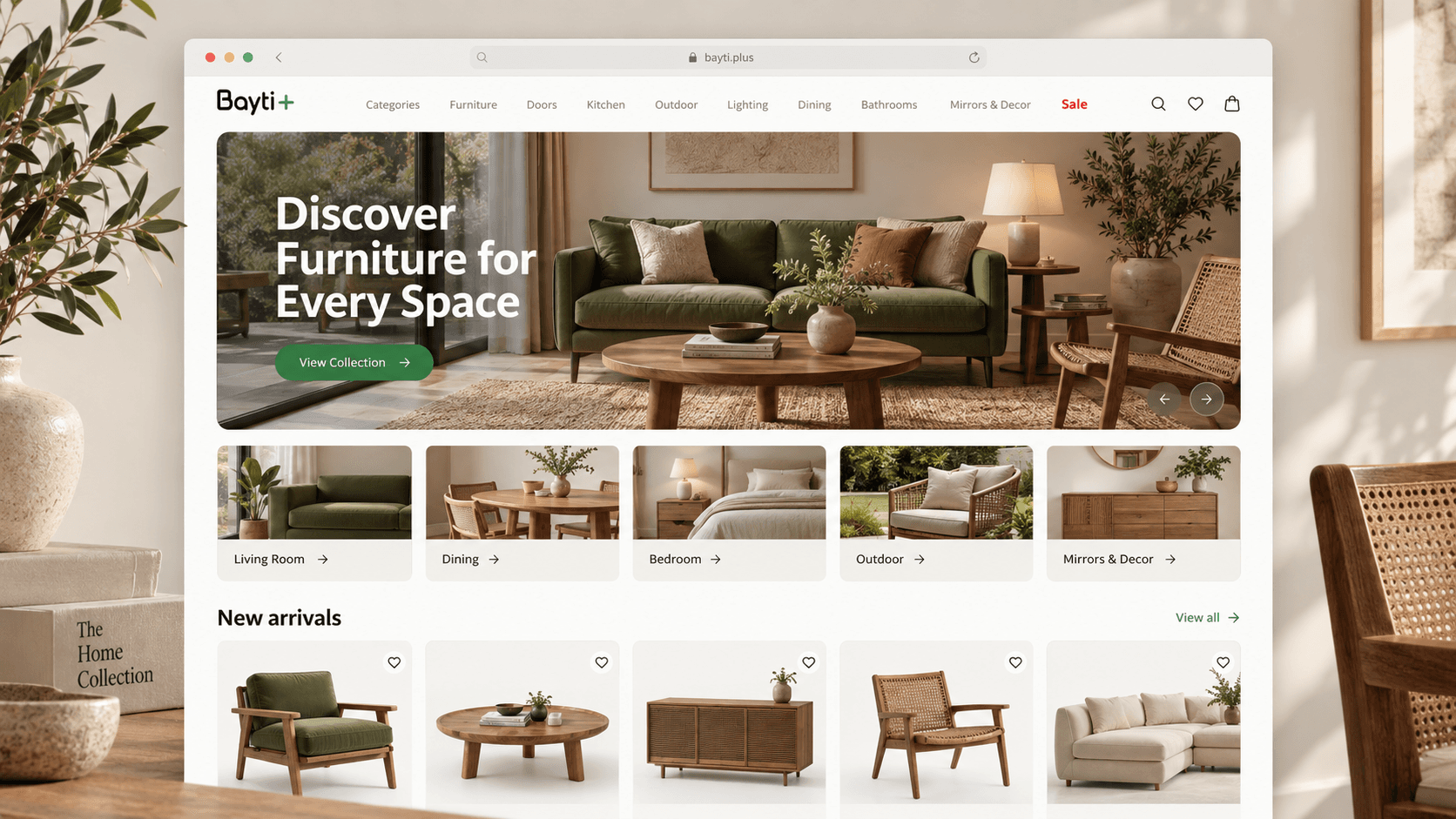
A multi-vendor furniture marketplace for Palestine and Israel: vendors list and fulfil, customers buy across vendors in one basket, admins moderate.
E-commerce2026
The problem
Furniture in Palestine and Israel is sold the way it has always been sold: showroom by showroom, and increasingly through a scattering of Instagram accounts and WhatsApp threads. A buyer who wants to compare a sofa across four sellers has to visit four places, and has no way to know which of them will still answer the phone after the money changes hands.
For the sellers the problem is the mirror image. A workshop that makes excellent furniture has no route to a customer two cities away, and no infrastructure to take an order, take a payment, or prove it is worth trusting. Building that alone is not realistic for a business whose actual skill is joinery.
What we built
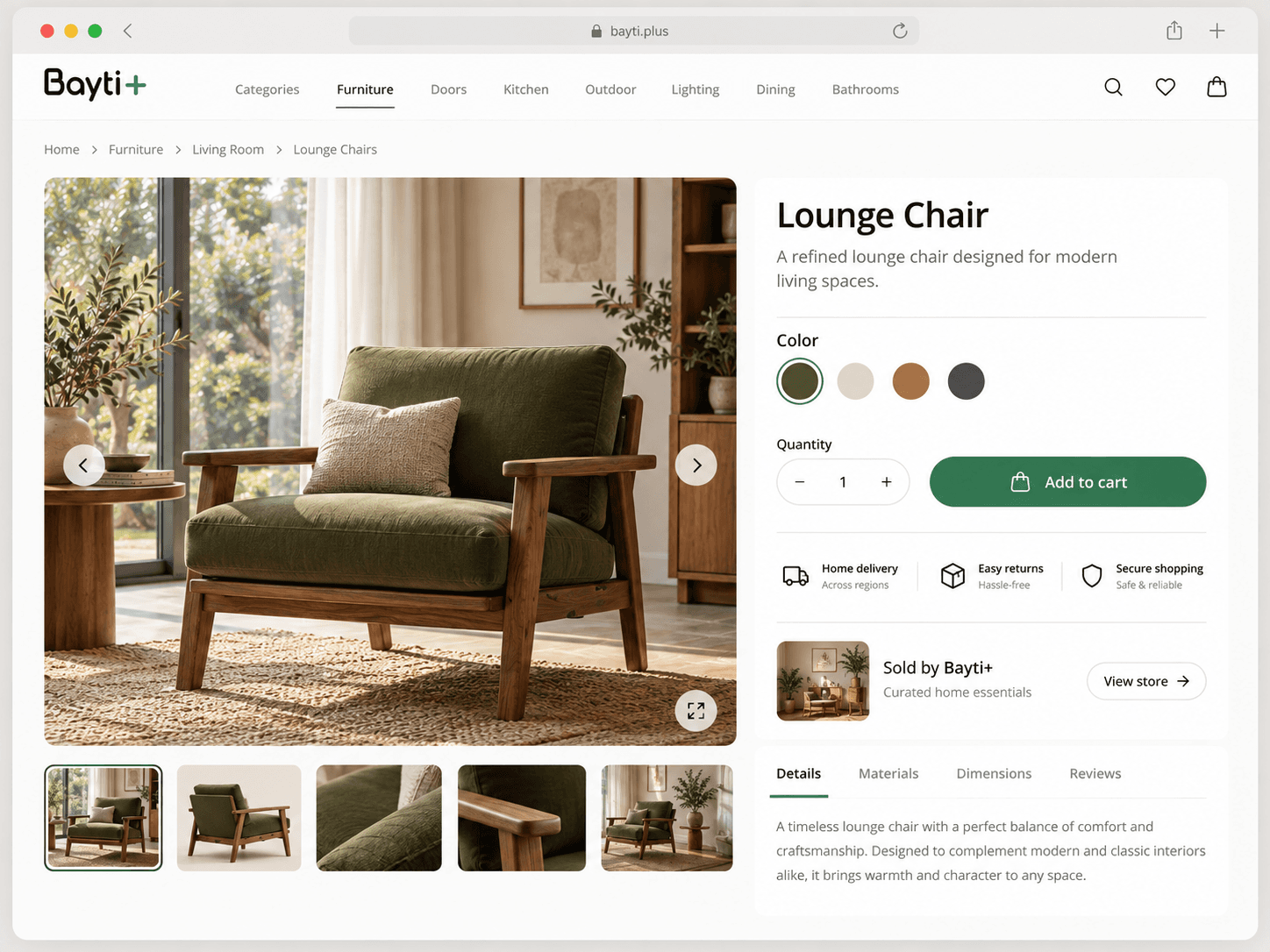
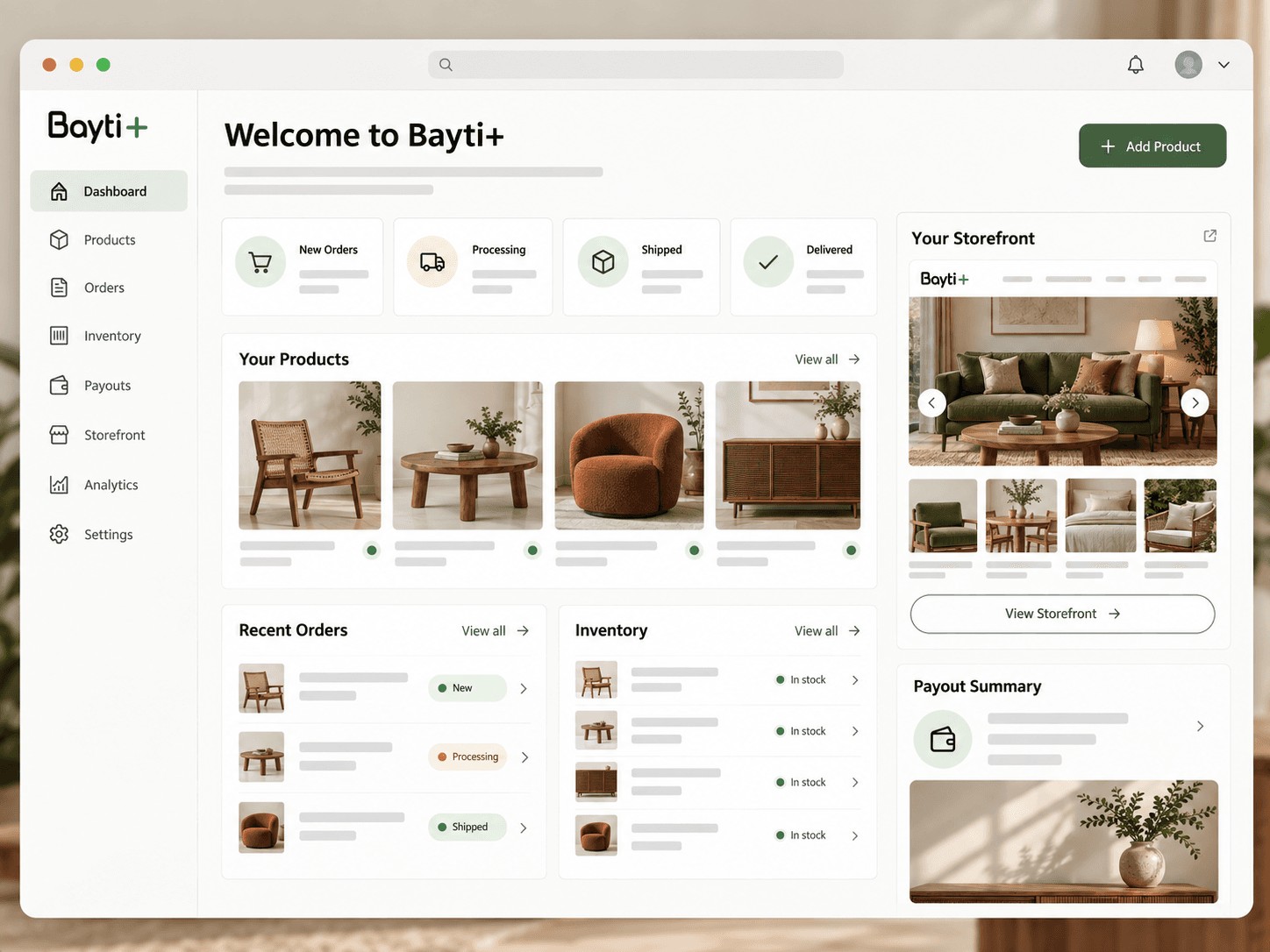
One marketplace where many vendors sell side by side. A vendor registers, is reviewed, then lists products with variants, images and stock, and runs their own orders, coupons, payouts and analytics from a panel that is theirs. A customer browses across every vendor at once, compares, and checks out — one basket, one order, even when the contents come from several different sellers.
Admins sit above all of it: approving vendors, moderating reviews and questions, managing the category tree, and holding the platform to a standard the customer never has to think about.
The same rules run everywhere. What a form will accept on the site is exactly what the platform will accept behind it — one definition rather than two copies that drift apart over a year of changes. That is what keeps a marketplace consistent as the number of sellers grows, and it is what a customer app will be built on later.
The parts that were not obvious
Money across many sellers. A single order can span several vendors, which means the payment has to split, each vendor's balance has to move atomically, and a refund has to reverse cleanly on the right side of the ledger. Cash on delivery is a first-class path, not an afterthought — it is how a large share of customers in this market actually pay.
Search that understands furniture. Product text is embedded so the catalogue can be searched by meaning and “products like this one” is a real answer rather than a category match. Listings are also drafted with AI assistance, so a vendor who is good at making furniture is not blocked by having to write about it.
Trust, as a feature. Verified-purchase reviews, a public question-and-answer thread on every product with the vendor answering, and notifications that reach a customer when a watched item drops in price or a new arrival lands. None of that is decoration on a marketplace where the seller is a stranger.
Where it is
The backend is complete across every module, and the storefront, customer accounts and the vendor panel are built and connected. We are also developing a customer mobile app on the same shared contract, so the marketplace can travel with the customer beyond the storefront.
It has not opened to the public yet. That is the next milestone, and it is the one that will produce the first numbers worth putting on this page. The storefront is available at baytiplus.co.
What this involved
Want something like BaytiPlus's?
Tell us what you are trying to build and MaffeiTech will scope it with you.